

Key Takeaways
- Programmatic uses real-time bidding (RTB) to buy ad impressions in under 100 milliseconds.
- The ecosystem runs on DSPs, SSPs, and DMPs working together.
- It replaces guesswork-based demographic targeting with first-party data and behavioral signals.
- Benefits include real-time optimization, cross-device reach, and transparent reporting.
Programmatic advertising has fundamentally changed how brands reach their audiences. Instead of manual negotiations and insertion orders, programmatic uses AI and real-time bidding to purchase ad impressions in milliseconds — delivering the right message, to the right person, at the right time.
At its core, programmatic is about precision. Traditional media buying relied on broad demographics and guesswork. Programmatic leverages first-party data, behavioral signals, and machine learning to build hyper-targeted audience segments that convert.
How programmatic advertising works
The ecosystem includes Demand-Side Platforms (DSPs), Supply-Side Platforms (SSPs), and Data Management Platforms (DMPs) working in concert. When a user loads a webpage, an auction happens in under 100 milliseconds — your bid competes against thousands of others, and the winner's ad appears instantly.
Here's what happens in that fraction of a second:
- 1A person opens a page or app with ad space. The publisher's supply-side platform (SSP) offers the impression for auction, along with context such as the page, device and location.
- 2Demand-side platforms (DSPs) check the impression against each advertiser's targeting, budget and bid strategy.
- 3The highest eligible bid wins, and the winning ad is served, usually before the page has finished loading.
- 4Delivery, viewability and conversion data flow back to the DSP, which uses them to bid smarter on the next impression.
The main ways to buy programmatic media
| Buying type | How it works | Best for |
|---|---|---|
| Open auction (RTB) | Any advertiser can bid on available impressions in real time | Scale and efficient reach |
| Private marketplace (PMP) | An invite-only auction run by a publisher for selected buyers | Premium inventory with more control |
| Preferred deals | A fixed price agreed in advance, with a first look before the open auction | Priority access without guaranteed volume |
| Programmatic guaranteed | Reserved inventory at a fixed price, bought through a DSP | Large campaigns that need guaranteed delivery |
Where programmatic ads can run
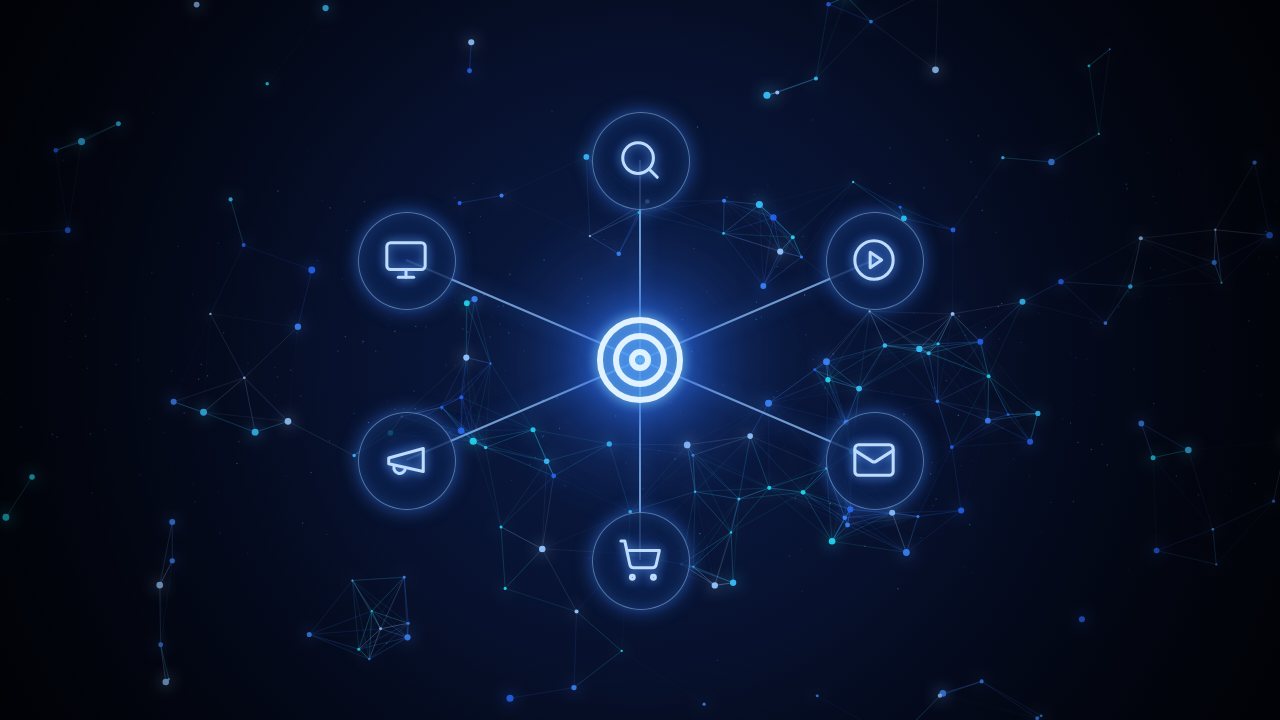
Programmatic is no longer just banner ads. Through a single DSP, brands can buy display, native, online video, audio, connected TV (CTV) and, increasingly, digital out-of-home screens. That makes it one of the few ways to plan reach across many formats with one budget and one set of reports.
Benefits of programmatic advertising
Key advantages include real-time optimization, granular targeting, cross-device reach, and transparent reporting. Industry benchmarking has found AI-optimized programmatic campaigns delivering up to 30% lower cost-per-acquisition alongside improved conversion rates compared to non-optimized buying.
Common challenges and how to manage them
- Brand safety. Use inclusion and exclusion lists, contextual controls and verification partners so ads don't appear next to content that hurts your brand.
- Invalid traffic and fraud. Buy through reputable supply paths, check authorized sellers (ads.txt and sellers.json) and monitor for invalid traffic.
- Viewability. An impression nobody sees has no value. Optimize and report on viewable impressions, not just served ones.
- Signal loss. Privacy changes reduce the user-level data available for targeting, so contextual targeting and your own first-party data matter more every year.
- Hidden fees. Every step in the supply chain can take a cut. Ask for transparent reporting on how much of your spend actually reaches publishers.
How to get started with programmatic advertising
- 1Define one business goal and a primary KPI before choosing tactics.
- 2Choose a DSP, or a partner who runs one, that gives you transparent, detailed reporting.
- 3Start with audiences you can trust: your first-party data, contextual segments and retargeting.
- 4Set brand-safety and frequency controls from day one.
- 5Measure incrementality, not just view-through conversions, before you scale budget.
At Growth Intellects, we combine programmatic with our proprietary reporting system to give brands full visibility into every impression, click, and conversion — turning media spend into a measurable growth engine.
FAQ
Is programmatic advertising the same as real-time bidding?
No. Real-time bidding is one way to buy programmatically. Private marketplaces, preferred deals and programmatic guaranteed are also programmatic, but they use invite-only auctions or fixed prices.
What's the difference between a DSP and an SSP?
A demand-side platform (DSP) is the software advertisers use to buy impressions. A supply-side platform (SSP) is the software publishers use to sell them. The two meet in the auction.
Is programmatic advertising only for big brands?
No. Minimum budgets depend on the platform or partner, and self-serve DSPs make programmatic accessible to smaller advertisers. Start with a clear goal and tight targeting rather than broad reach.
Can programmatic ads run on TV?
Yes. Connected TV inventory on streaming apps and smart TVs can be bought programmatically, with the same targeting and reporting as other digital channels.
Related articles



Zeba Warsi
AI-Driven Growth Strategist
Zeba Warsi is an AI-first growth strategist focused on scaling brands through performance marketing, intelligent automation, and data-driven decision-making. With hands-on experience across global markets, Zeba specializes in turning insights into scalable strategies, driving traffic, optimizing conversions, and unlocking sustainable digital growth. She actively shares practical, future-ready marketing frameworks to help businesses stay competitive in an AI-powered landscape.